

Curved glass gives architects and designers the ability to create shapes that would be difficult or impossible to achieve with conventional flat glazing. But as a curve becomes tighter, fabrication becomes more demanding.
The question is not simply, “Can this glass be bent?” The glass thickness, radius, coating, safety requirements, optical expectations, dimensions and surrounding framing all need to work together.
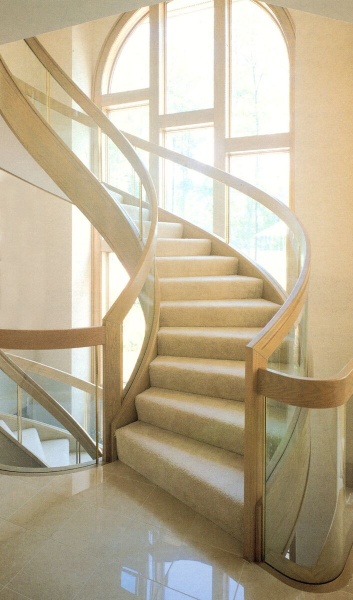
Bent Glass Design fabricates a wide variety of curved configurations, including cylindrical bends, compound shapes, reverse curves and sharp-angle bends. When a project calls for a particularly tight radius, involving the fabricator early can help identify potential limitations before the surrounding system is finalized. Bent Glass Design, Inc
1. Glass Thickness Affects the Achievable Radius
One of the first considerations is the relationship between glass thickness and bend radius.
As a general starting guideline, the minimum radius can be approximately five to ten times the glass thickness. The original example on this page used 3 mm (1/8-inch) glass with a radius around 25.4 mm (1 inch).
That guideline should not be treated as a universal specification, however. The achievable radius also depends on the glass configuration, shape, fabrication process and performance requirements.
If your design requires a particularly tight radius, confirm feasibility before finalizing the frame or opening.
2. Coatings Can Limit How Tightly Glass Can Be Bent
Coated glass introduces another variable.
During bending, the outside surface of the glass is stretched while the inside surface is compressed. As the radius becomes tighter, certain coatings can become more difficult to accommodate without affecting their appearance or performance.
For projects requiring Low-E or another performance coating, the coating type, glass thickness and requested radius should be reviewed together rather than assuming that a coating suitable for flat glass can automatically be used in the same tight-radius configuration.
Bent Glass Design offers clear, tinted and Low-E glass options, but not every glass or coating is appropriate for every shape. Bent Glass Design, Inc
3. Tight Radii Can Affect Optical Quality
Optical quality becomes increasingly important when curved glass is used in prominent architectural applications.
As the glass conforms to a tighter shape, the bending process may introduce visual distortion in transmission or reflection. The amount and visibility of that distortion can vary based on:
- Radius
- Glass thickness
- Overall dimensions
- Glass type
- Viewing angle
- Reflective or coated surfaces
- Final application
That does not mean a tight radius cannot be produced. It means visual expectations should be part of the specification process, particularly for storefronts, railings, windows, display applications and other locations where people will view through or across the glass.
4. Safety Requirements Need to Be Considered Early
Curving glass into the desired shape does not automatically make it safety glazing.
Depending on the application, the final product may need to be laminated, tempered or otherwise configured to satisfy applicable safety requirements. Tight radii can also create additional limitations for certain heat-treated configurations.
Lamination provides another option by bonding multiple glass plies together so the assembly can provide post-breakage retention and safety performance appropriate to the specified application.
The final construction should always be determined according to the project’s actual requirements rather than selecting the curve independently and addressing safety afterward. Bent Glass Design, Inc
Learn more about laminated glass
5. Curved Glass Tolerances Matter to the Surrounding Design
A curved lite does not exist independently from its frame.
The glass, opening, frame, installation clearance and fabrication tolerances all need to work together. Bent Glass Design’s existing design guidance specifically recommends accounting for curved-glass tolerances before finalizing narrow flanges or other framing details. The site also references ASTM C1464, Standard Specification for Bent Glass, in its curved-glass fabrication guidance. Bent Glass Design, Inc
This becomes particularly important with a tight radius because a small dimensional discrepancy can have a larger effect on fit and installation.
Consider:
- How the glass will enter the frame
- Available installation clearance
- Setting-block requirements
- Edge coverage
- Removal or replacement access
- Fabrication tolerances
- Whether the glass is being installed from the interior or exterior
Designing the frame and curved glass together is considerably easier than attempting to make a finished piece of glass conform to an opening that was designed without manufacturing tolerances in mind.
6. Accurate Measurements Are Critical
Flat glass can often be ordered from basic width and height dimensions. Curved glass requires more information.
Depending on the shape, Bent Glass Design may need measurements such as:
- Girth
- Height or width
- Radius
- Chord
- Depth
- Bend angle
- Length of any attached flats
When the exact radius is not known, chord and depth measurements can help define the curve. More complex configurations may require a hardboard or Mylar template. Reverse curves should be treated as separate curve segments when determining their radius or chord-and-depth dimensions. Bent Glass Design, Inc
See our curved glass measuring guide
7. Tight-Radius Glass Is Best Addressed During the Design Stage
Some of the most difficult curved-glass problems begin when the glass fabricator is brought into the project after the opening, frame, radius and glass makeup have already been finalized.
An early technical review gives the design team an opportunity to evaluate:
- Whether the requested radius is practical
- Appropriate glass thickness
- Glass and coating options
- Safety-glazing requirements
- Optical expectations
- Fabrication tolerances
- Installation and framing considerations
The objective is not simply to produce curved glass. It is to produce curved glass that works within the entire architectural assembly.
Can Curved Glass Be Made With a Very Tight Radius?
In many cases, yes. The achievable radius depends on the thickness, glass type, shape and final construction. Very tight radii should be reviewed by the fabricator before the surrounding system is finalized.
Does Thicker Glass Require a Larger Bend Radius?
Generally, glass thickness affects the minimum achievable radius. Exact fabrication limits depend on the specific glass and configuration.
Can Low-E Glass Be Bent?
Certain Low-E and coated glass products can be curved, but coating type, thickness and bend radius need to be evaluated together.
What Information Should I Provide for a Curved Glass Quote?
Provide the glass dimensions and shape information available to you, including radius or chord/depth, girth, height or width, glass makeup and project requirements. Drawings or templates may be necessary for complex shapes.
Planning a Tight-Radius Curved Glass Project?
Bent Glass Design has manufactured custom architectural curved glass since 1988 and can help review the shape, measurements, glass options and fabrication requirements before production begins. Bent Glass Design, Inc
Request a Quote: Contact Bent Glass Design


I would like to know how much could be the minimum radius to bend a 13/16″ laminated glass?
This blog post sheds light on the challenges of fabricating and repairing curved glass with tight radii, showcasing the expertise required in the glass industry. Curved glass adds a touch of elegance to architectural designs, but its repair and fabrication demand specialized knowledge. As someone who appreciates unique design elements, I find the complexities of curved glass intriguing. Learning about the considerations and techniques involved in repairing curved glass highlights the level of craftsmanship needed to preserve both aesthetics and functionality.
Architectural innovation often leads us towards awe-inspiring designs, like the allure of curved glass. The challenges, however, are intriguing. The glass thickness, as you pointed out, is a key concern, as it affects the minimum radius. A balance between aesthetics and practicality is crucial.